Every Court examination tests the same three skills: theory, tasting and practical service. What changes as you climb is the form each test takes, from a multiple-choice paper at the Introductory to a spoken theory test at the Master Sommelier Diploma.
This article compares the three parts of the examination across the four levels, from the first paper to the last.
01Theory
The theory paper changes the most. The Introductory sets a multiple-choice theory paper of 65 questions. The Certified sets a written paper of 40 multiple-choice and short-answer questions: ten multiple choice and thirty short answer, pitched at a higher level than the Introductory.
The Advanced sets a one-hour paper of 24 multiple-choice questions and 60 short-answer questions. At the Master Sommelier Diploma the paper disappears: theory becomes a one-hour verbal test, with knowledge examined by oral questioning. Candidates are expected to speak with authority on the wine regions of the world and their products.
| Theory | Tasting | Service | |
|---|---|---|---|
| Introductory | 65 multiple-choice questions | None | Short practical service test |
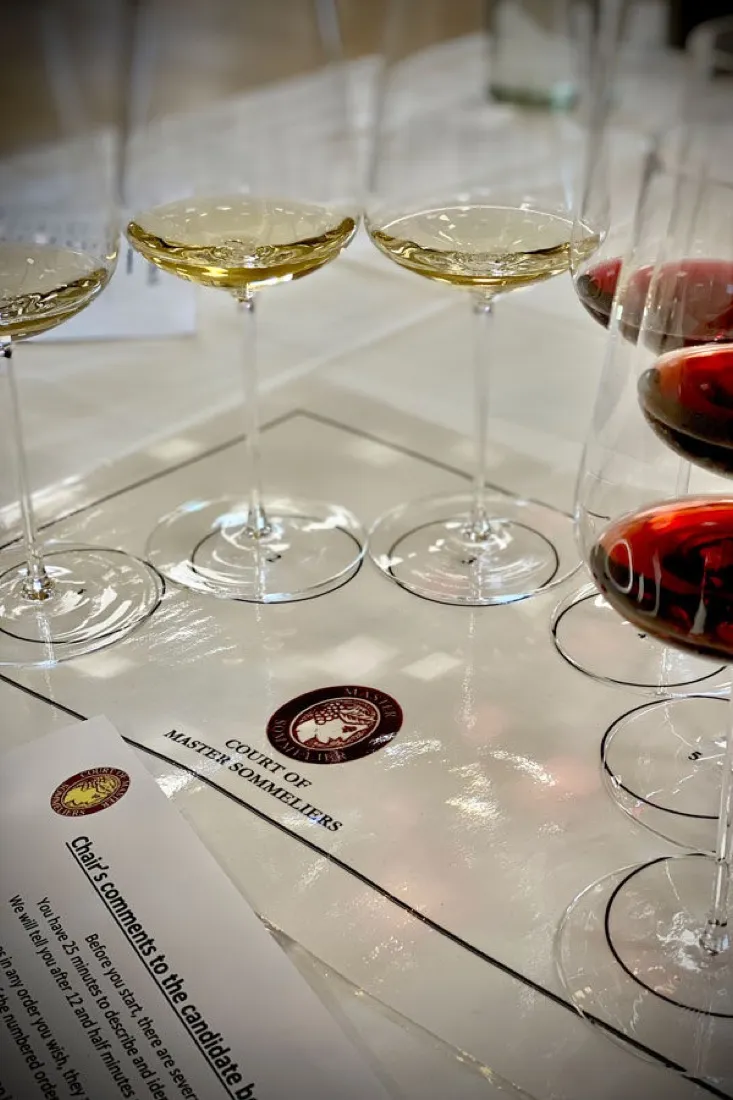
| Certified | 40 questions: 10 multiple choice, 30 short answer | Two wines tasted blind, on a tasting grid | Short practical service test |
| Advanced | One hour: 24 multiple choice, 60 short answer | Six wines tasted blind in 25 minutes, spoken | 45 minutes |
| MS Diploma | One hour, spoken | Six wines tasted blind in 25 minutes, spoken |